Floating Fountain
A floating fountain is an independent water feature mounted onto a buoyant platform that floats on the surface of a pond, lake, or large basin. Unlike traditional stationary fountains that are anchored to a fixed floor plate, floating fountains automatically rise and fall with fluctuating water levels, making them exceptionally versatile for natural bodies of water.
Beyond their stunning aesthetics, these systems serve a critical environmental role as surface aerators. By continually pushing water into the air, they rapidly increase dissolved oxygen levels, eliminate stagnant dead zones, prevent algae blooms, and sustain fish health.
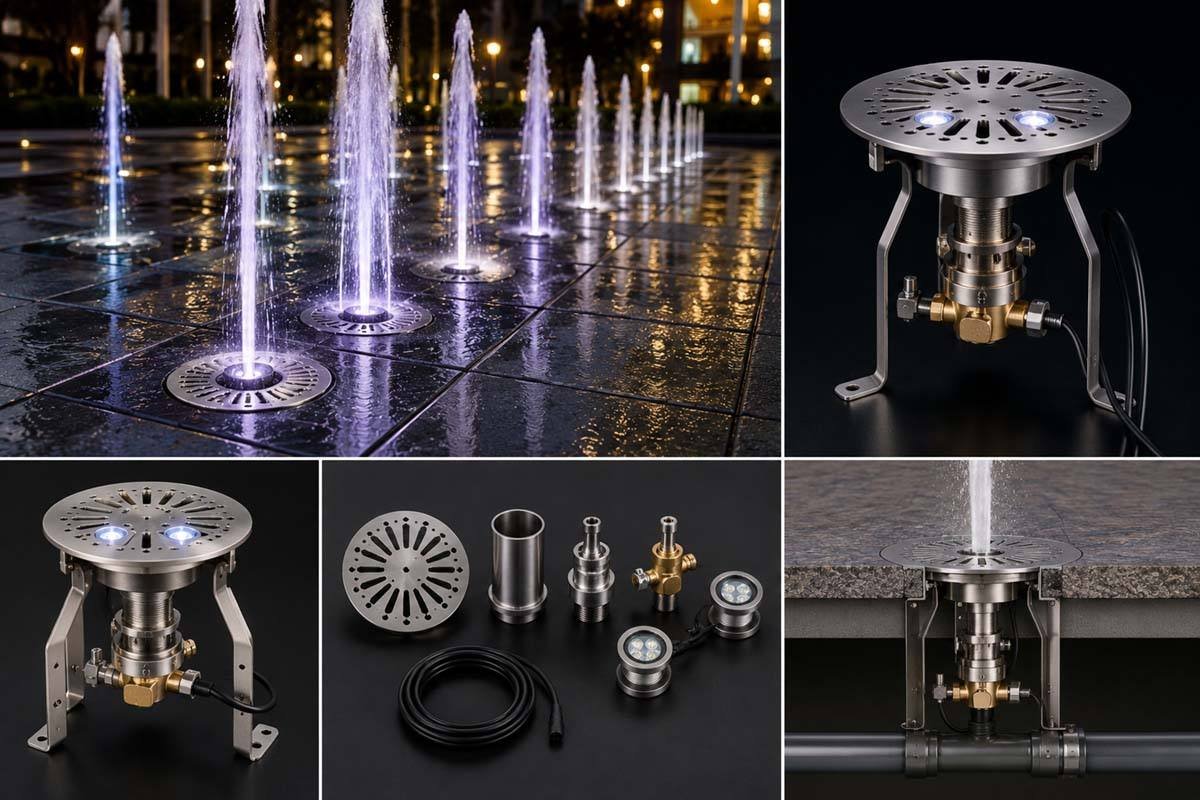
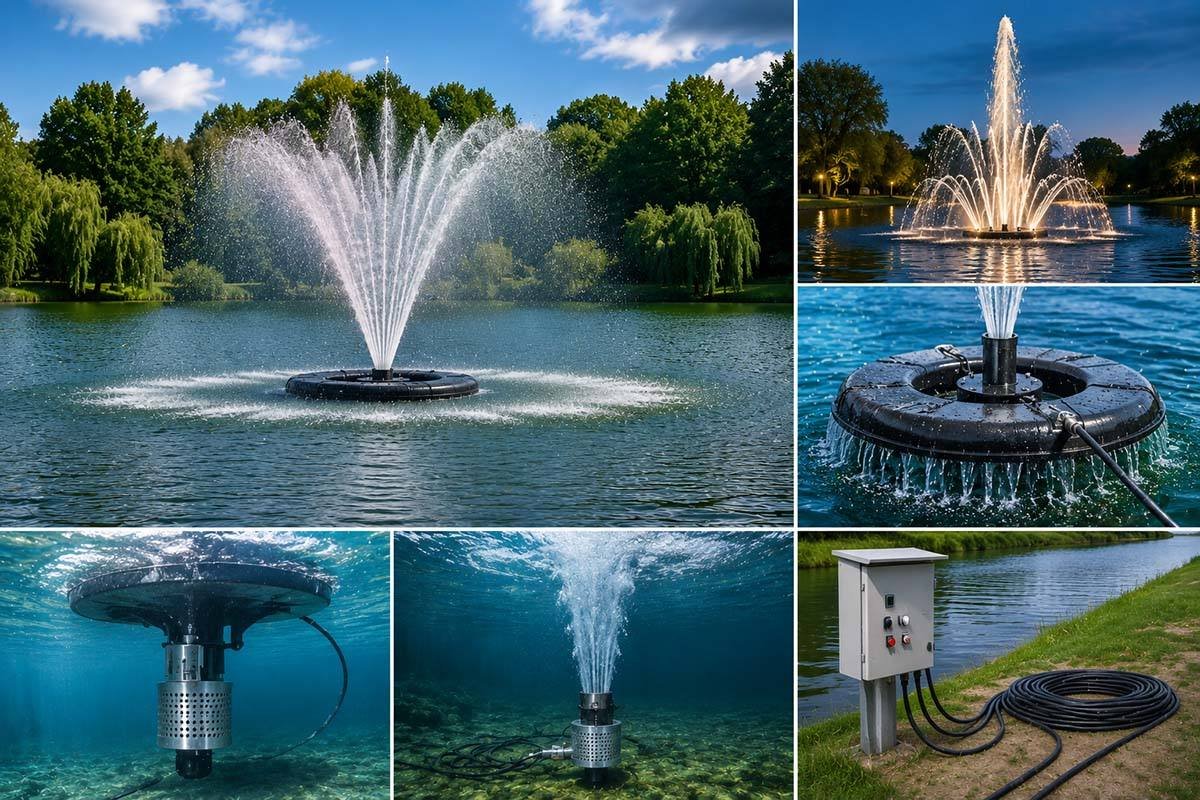
A standard floating fountain bypasses complex underwater civil construction, relying instead on a tightly integrated, self-contained layout
- The Buoyant Float: A heavy-duty, UV-stabilized, polyethylene or moulded plastic ring that sits right below or at the water line.
- The Submersible Pump: Suspended directly under the float. Because it sits near the surface rather than on the pond bed, it draws in cleaner water, vastly reducing clogs from bottom-dwelling sludge or sediment.
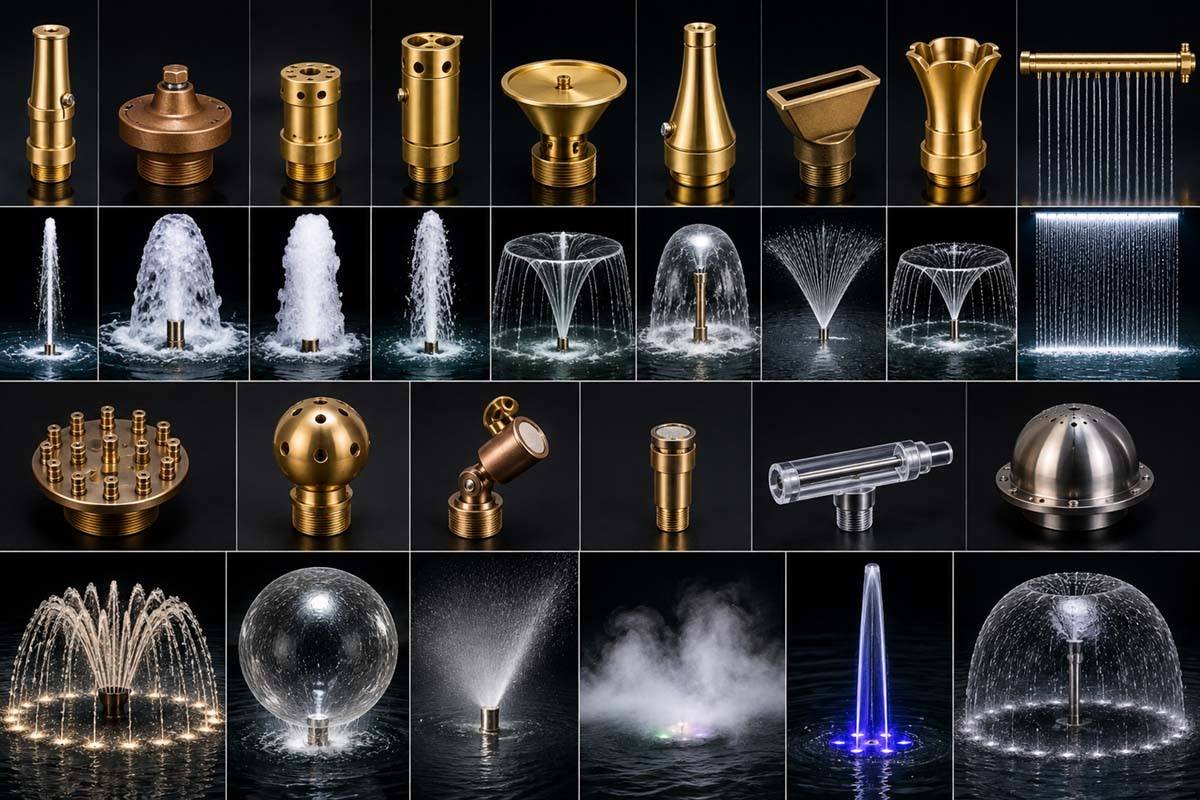
- The Precision Nozzle: Mounted above the float to break the water stream into distinct patterns (e.g., V-shaped crowns, high vertical arches, geysers, or tiered trumpets).
- Underwater Power & Controls: Heavy-duty, marine-grade power cables (weighted down to prevent motor contact) run to a shore-mounted control box equipped with GFCI safety switches and digital timers.